
Best Container for Wine Fermentation: The Ultimate Guide
Choosing the best container for wine fermentation is one of the most critical decisions a winemaker can make. The fermentation vessel directly influences oxygen exposure, temperature stability, microbial activity, and ultimately the flavor, texture, and identity of the wine.
From stainless steel tanks to oak barrels, concrete vats, and terracotta amphorae, each container offers distinct advantages—and limitations. This guide provides a practical, experience-based comparison to help winemakers choose the right fermentation container for their goals, wine style, and production scale.
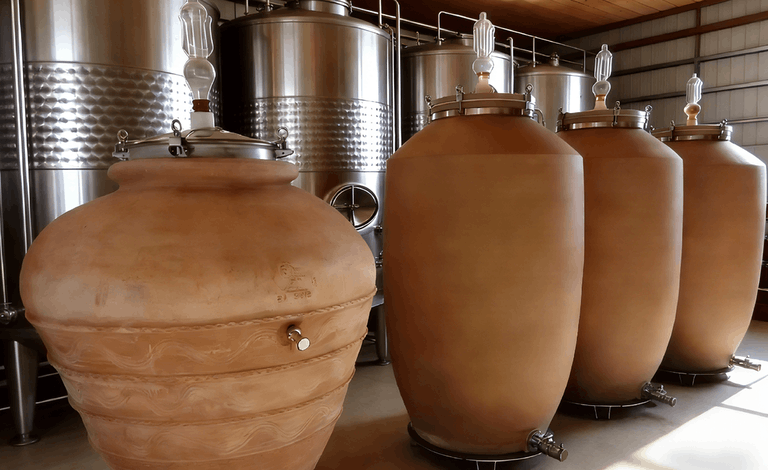
Why Choosing the Right Fermentation Container Matters
Wine fermentation is not a neutral process. The vessel itself plays an active role, directly influencing yeast behavior, heat dissipation, and the interaction between the wine and oxygen, ultimately shaping its flavor, texture, and style.
Key impacts of fermentation containers:
● Oxygen management: Controls yeast health and phenolic development
● Thermal behavior: Affects fermentation speed and stability
● Flavor expression: Influences texture, aromatics, and mouthfeel
● Fermentation safety: Determines consistency and risk of spoilage
In reality, the key to determining whether a fermentation vessel is “optimal” lies in its ability to perfectly combine precise technical control with your unique style and vision. A suitable vessel is an indispensable tool for realizing your winemaking philosophy and shaping the ideal wine quality.
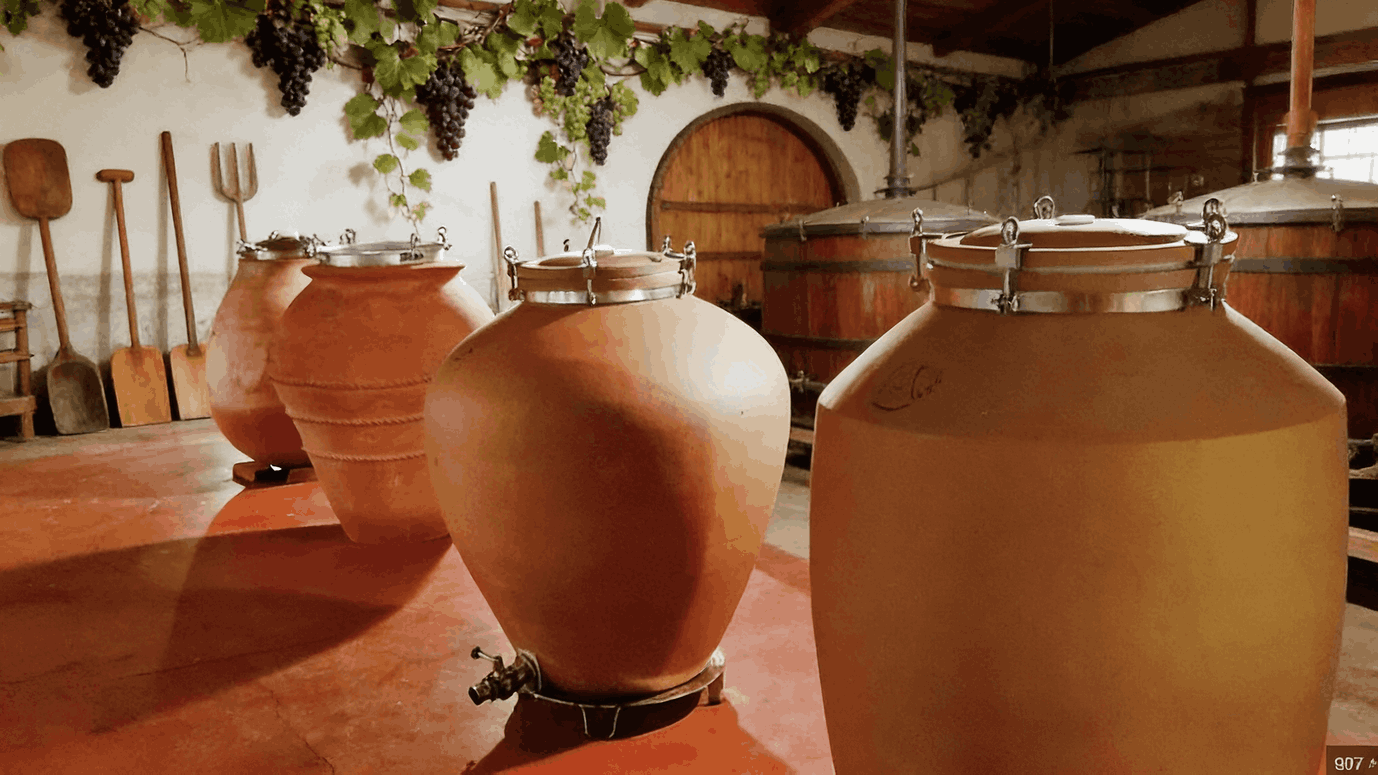
What Defines the “Best” Container for Wine Fermentation?
Before comparing fermentation vessels, evaluation criteria must be clearly defined. The so-called “best” is not a universal answer, but rather the tool that best combines technical control with stylistic intent, tailored to your specific grape variety, target flavor, and winemaking philosophy.
Core Evaluation Factors
1. Oxygen Interaction
Oxygen interaction is a key characteristic of fermentation vessels. Different vessels have varying degrees of control over oxygen; for example, stainless steel tanks tend to be completely sealed to preserve pure fruit aromas, while earthenware tanks provide a controlled micro-oxidative environment to soften tannins and add layers of flavor.
2. Temperature Control
Stable temperature control is crucial for wine fermentation. It reduces the stress on yeast during metabolism, effectively preventing unpleasant off-flavors and ensuring the purity and consistency of the wine’s flavor.
3. Flavor Neutrality vs Contribution
Some fermentation vessels are designed to preserve pure fruit aromas, playing a neutral flavor role; while others actively contribute flavors, shaping the final style of the wine. Understanding this difference is key to choosing the right vessel.
4. Fermentation Risk & Hygiene
Easy and thorough cleaning, strict microbial control, and repeatable operation are key to ensuring hygienic fermentation and mitigating risks, and are especially important in large-scale production.
5. Consistency & Scalability
For professional wineries, consistency and scalability of fermentation vessels are crucial, as this directly ensures that the quality of wines from different years remains stable and reliable.
These standards regarding oxygen, temperature, flavor, and hygiene provide a solid foundation for objectively comparing different fermentation vessels. Only through comprehensive evaluation can the “best” vessel be defined for your specific winemaking goals.
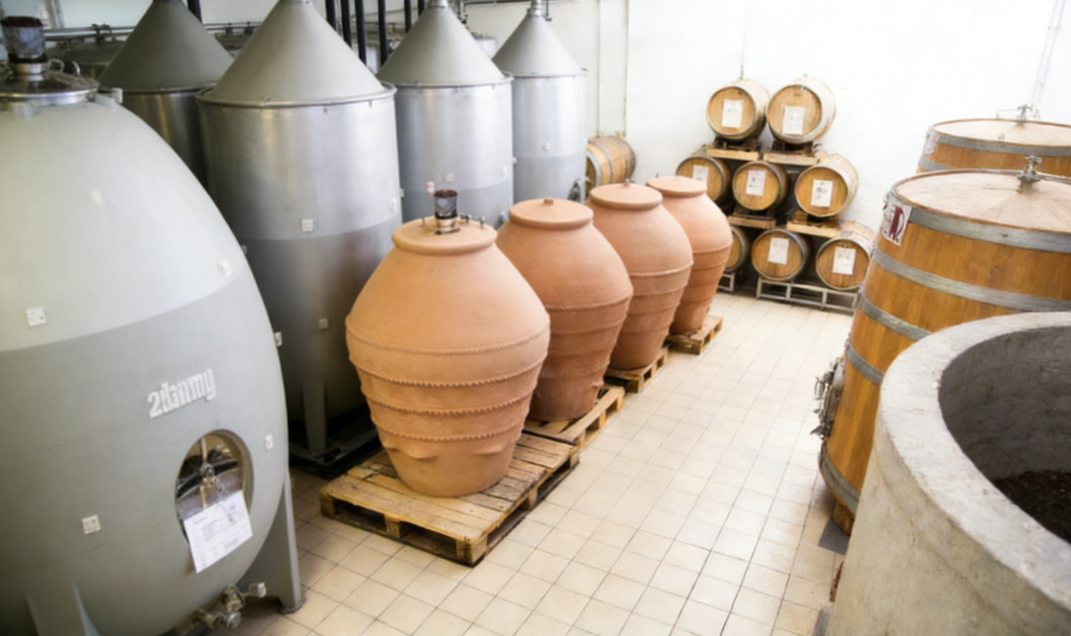
Advantages and Disadvantages of Stainless Steel Tanks
Stainless steel tanks are the industry standard for modern wine fermentation. Their main advantages are their excellent inertness and hygiene control, but their disadvantages may be that they cannot bring additional flavor evolution or complex micro-oxidation characteristics to the wine.
Advantages
● Complete oxygen exclusion
● Excellent temperature control
● High hygiene and easy cleaning
● Maximum consistency and repeatability
Limitations
● No oxygen exchange
● Can produce technically perfect but stylistically neutral wines
Best for
● Aromatic white wines
● Large-scale commercial production
● Winemakers prioritizing precision and safety
Stainless steel tanks typically provide the safest and most controlled fermentation environment, but their expressive power may be limited. They excel at ensuring purity and stability, but often cannot actively impart more complex flavor layers to the wine.

Advantages and Disadvantages of Oak Barrels
Oak barrels impart unique flavors such as spices and smoke to wine, and promote slow oxidation and tannin integration, thus significantly increasing the complexity and layering of the wine.
However, this traditional process also comes at a high cost and can potentially overpower the pure fruit aromas of the grapes themselves.
Core Advantages
● Oxygen permeability
● Adds texture and aromatic compounds
● Enhances structure in certain styles
Insufficient
● Strong flavor influence
● Difficult sanitation
● High cost and variability
The Most Suitable Wine to Be Made
● Structured red wines
● Winemakers intentionally seeking oak-driven profiles
Oak barrels are not neutral fermentation vessels, but rather powerful style tools that can add signature spice and toasty flavors to wines.
On the other hand, this strong influence can also mask the original fruit aromas of the grapes, and their high cost and difficulty in controlling oxidation mean they are not suitable for all wines or winemaking goals.
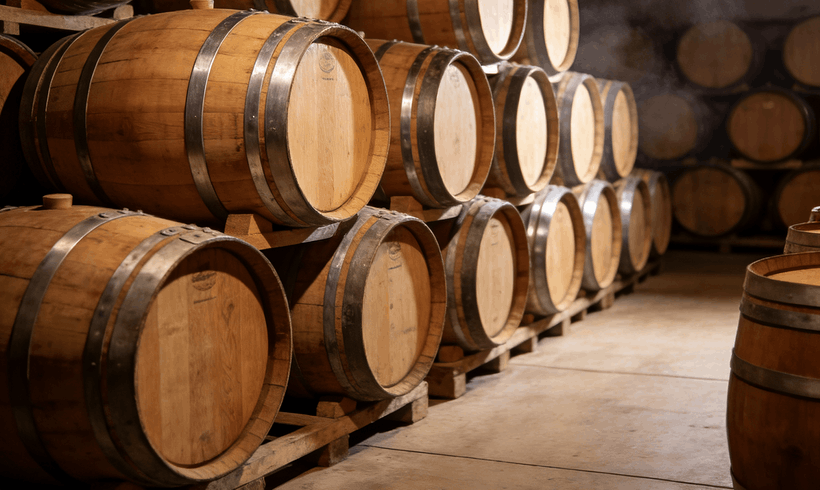
Concrete and Cement Tanks of Advantages & Disadvantages
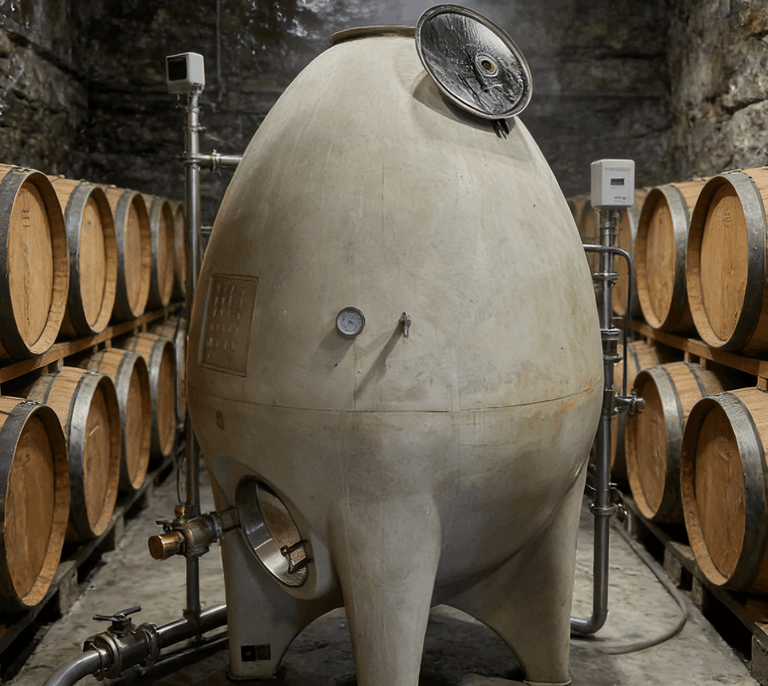
Concrete fermentation tanks combine ancient micro-oxidation principles with modern precision engineering, their thick walls providing excellent temperature stability. Simultaneously, they facilitate gentle oxygen exchange, helping wines slowly develop a rounded texture.
Similar to amphora fermentation, concrete tanks require proper pretreatment and internal wall maintenance. Their significant weight and relatively complex cleaning requirements are practical factors that must be considered in industrial production.
Significant Advantages
● Excellent thermal inertia
● Gentle oxygen exchange
● Relatively neutral flavor impact
Limitations
● Heavy and expensive
● Less flexible once installed
Concrete containers are favored by wineries seeking a balance between control and expression. They offer advantages similar to amphorae in terms of micro-oxidation and temperature control, while also possessing the stability of modern engineering, although their weight and maintenance requirements must be considered.
Terracotta Amphorae of Advantages & Challenges
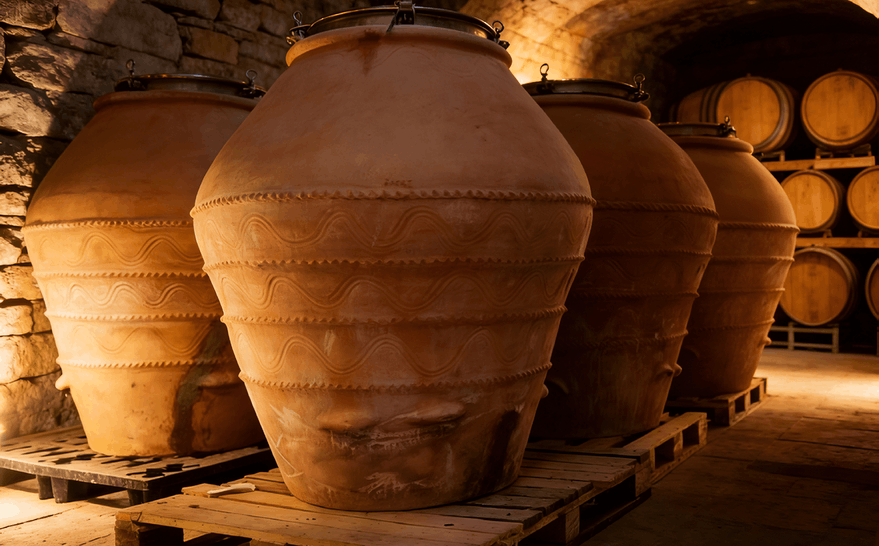
HEXIN focuses on integrating the ancient amphora process with modern winemaking science. As the oldest and increasingly modernized fermentation vessel, the amphora’s unique micro-oxidative environment imparts an irreplaceable texture and vibrancy to wines.
We have a deep understanding of the amphora’s characteristics and are dedicated to helping winemakers overcome the challenges of temperature control and hygiene management. Learn more about HEXIN’s amphora solutions and explore how to transform this traditional vessel into a stable and reliable modern winemaking tool for your winery.
How Amphora Fermentation Works
The core principle of Amphora fermentation lies in its naturally porous clay material.
This characteristic allows for a slow, continuous, and minute exchange of oxygen between the wine and the surrounding environment. This softens tannins and enhances the texture while preventing the introduction of foreign flavors such as oak, thus better preserving the purity of the grape variety.
Key Benefits
● Natural micro-oxygenation
● No flavor contamination
● Enhanced mouthfeel and clarity
● Strong expression of terroir
Potential Challenges
● Requires precise craftsmanship
● Cleaning and handling expertise needed
● Quality varies significantly between manufacturers
Best for
● Natural wines
● Orange wines
● Terroir-driven styles
● Small to mid-scale premium production
HEXIN’s design philosophy for Amphora focuses on balancing traditional techniques with precise control. High-quality Amphora allows for perfect micro-oxidation management, enhancing the wine’s body while ensuring a stable and reliable fermentation process.
Comparison: Wine Fermentation Containers at a Glance
| Container Type | Oxygen Exchange | Flavor Impact | Temperature Stability | Risk Level |
| Stainless Steel | None | Neutral | High | Low |
| Oak Barrel | High | Strong | Moderate | High |
| Concrete Tank | Moderate | Low | High | Medium |
| Terracotta Amphora | Moderate | Neutral | Moderate | Medium |
This comparison clearly demonstrates that no single fermentation vessel can dominate in all dimensions. The key is to choose a vessel that achieves the optimal balance between flavor, oxidation control, stability, and cost, based on your specific winemaking goals.
Which Container Is Best for Your Wine Style?
Natural & Organic Wines
For natural and organic wines seeking minimal intervention, Terracotta amphorae and concrete tanks are ideal choices.
They support natural yeast fermentation and provide a controlled micro-oxidative environment, fostering the natural evolution and individual expression of the wine with minimal intervention.
White Wines
Choosing fermentation vessels for white wines requires a balance between aroma retention and texture development.
Stainless steel tanks effectively lock in pure fruit aromas; for a richer texture without oak influence, the micro-oxidative environment provided by Terracotta amphorae is ideal.
Red Wines
Choosing a container for red wine requires a balance between structure and flavor orientation. Oak barrels significantly enhance the structure and complexity of the wine; however, for a purer expression of fruit and softer tannins, amphorae are a better option.
Orange Wines
For distinctive orange wines, Terracotta amphorae are widely considered the best fermentation vessel. Its micro-oxidative environment perfectly promotes the fermentation of white grapes with their skins, developing their signature complex texture, rich tannins, and alluring amber hues.
Small Batch vs Commercial Scale
Small batch: amphorae, barrels
Large scale: stainless steel with selective alternatives
What are Best Container for Wine Fermentation of Characteristics?
No single fermentation vessel is a panacea. The ideal vessel should be able to precisely control oxygen and temperature, be easy to clean to ensure hygiene, and consistently serve your specific winemaking goals, whether it’s showcasing the purity of the terroir or developing complex flavors.
The optimal choice depends on:
Wine style
● Desired flavor profile
● Risk tolerance
● Production scale
● Philosophical approach to winemaking
Professional wineries often use multiple containers in parallel to balance expression and consistency.
How Professional Wineries Combine Fermentation Containers
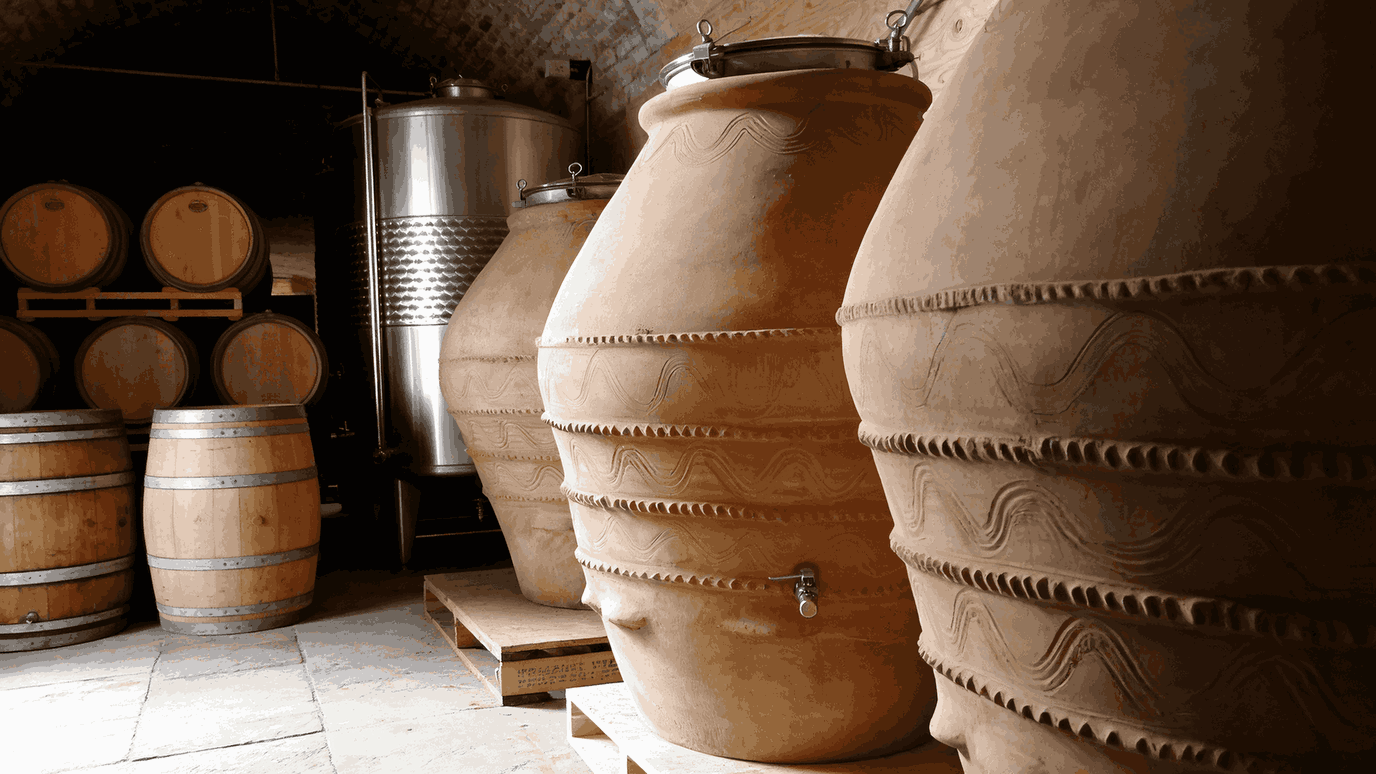
Many modern wineries employ a blended fermentation method. By combining stainless steel tanks, amphora barrels, or oak barrels, they can precisely control the flavor development and oxidation levels at each stage of fermentation, flexibly creating a more layered final wine.
● Stainless steel for primary fermentation control
● Amphorae for texture and expression
● Oak for structure and aging
This strategy minimizes risk while maximizing complexity.
Frequently Asked Questions (FAQ)
1.What is the best container for natural wine fermentation?
Terracotta amphorae and concrete tanks are widely favored due to their breathability and neutrality.
2.Is amphora fermentation risky?
When using professionally made amphorae and proper cleaning protocols, risks are comparable to other vessels.
3. Stainless steel vs amphora fermentation: which is better?
Stainless steel offers control and consistency; amphorae enhance texture and terroir expression.
4. Do amphorae add flavor to wine?
No. Properly fired terracotta does not impart flavor, only oxygen interaction.
Conclusion: Making the Right Fermentation Choice
Choosing the right fermentation vessel should not be about following tradition or trends, but rather about your clear intentions as a winemaker. A deep understanding of how each vessel affects the fermentation process is fundamental to making informed and confident choices.
Whether your goals are precise control, pure terroir expression, or the creation of a unique style, the right vessel should be an extension and tool for realizing your winemaking philosophy. It directly impacts the personality and quality of the final wine.
HEXIN is committed to providing modern winemakers with professional and reliable fermentation vessel solutions. If you are ready to explore the unique solution best suited for your winery, please contact us today to discuss how to achieve your specific winemaking vision.