
What Is Amphora Wine?
In recent years, amphora wine has quietly moved from the margins of niche wine bars into the vocabulary of sommeliers, winemakers, and curious wine drinkers around the world. It often appears on labels with words like natural, ancient, or minimal intervention—yet many people still ask the same simple question:
What exactly is amphora wine, and why does it matter today?
At its core, amphora wine refers to wine fermented and sometimes aged in clay or terracotta vessels known as amphorae. But the story goes far deeper than a container choice. Amphora wine represents a different philosophy of winemaking—one rooted in history, material science, and a renewed focus on purity and expression.
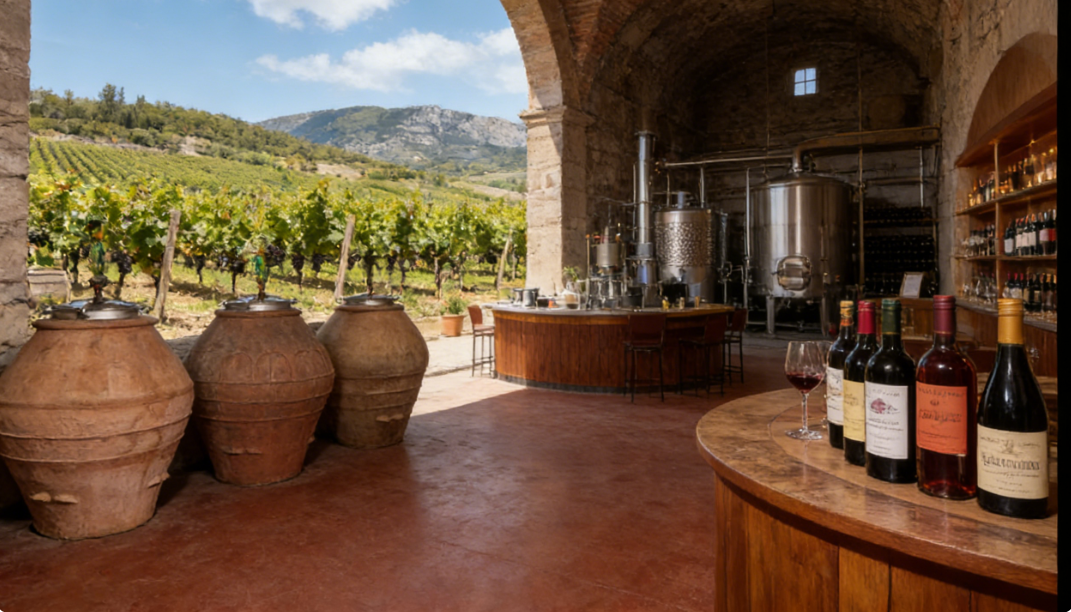
What Is Amphora Wine?
Amphora wine refers to wine fermented or aged in large, porous clay amphorae. As an ancient technique, it allows for controlled micro-oxygenation, softening tannins and enhancing complexity while avoiding the strong flavor influence of oak barrels. It is often used in the production of orange wines or natural wines that aim to express the terroir.
This unique winemaking method embodies the winemaker’s pursuit of precise control and authentic terroir expression within the vessel itself. Ultimately, it aims to produce wines with a unique texture, rich minerality, and a pure reflection of the grape variety and origin.
In modern winemaking, amphora wine typically means wine that is:
● Fermented in clay or terracotta vessels
● Influenced by gentle, natural oxygen exchange
● Shaped by the vessel itself rather than external flavors
Unlike oak barrels, amphorae do not add vanilla, toast, or spice notes. And unlike stainless steel, they are not completely inert. Clay sits somewhere in between—breathable, but neutral.
This balance is what makes amphora wine distinctive. The vessel becomes a silent partner in fermentation, allowing the wine to evolve without dominating it.
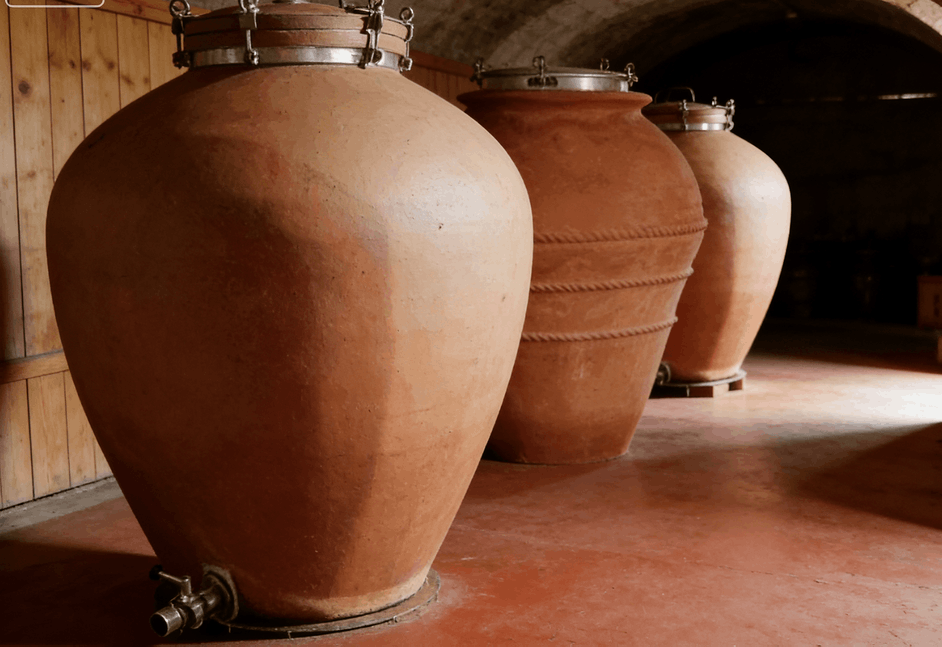
A Brief History of Amphora Winemaking
The history of winemaking in clay vessels is almost as old as human wine culture itself. From ancient Greece and Rome to Persia and the Caucasus region, amphora were central to the production, storage, and trade of wine.
The Georgian qvevri tradition is particularly famous, involving burying large amphora underground to ferment whole grape clusters. This embodies the fundamental principle of clay as a “living,” breathable material.
Although once replaced by stainless steel and other materials during the modern industrialization of winemaking, the current resurgence of amphorae is not merely nostalgia, but a rediscovery and precise utilization of the unique potential of clay.
How Is Amphora Wine Made?
Amphora winemaking is a meticulous process that emphasizes attention to detail. Its core principle lies in fermenting grapes directly in specially treated clay amphorae, fully utilizing the unique micro-oxidation environment of the clay vessels.
This is possible thanks to the excellent thermal insulation properties of the amphorae, especially those buried underground or with thick walls. Temperature fluctuations during fermentation are naturally regulated, leading to a stable and balanced fermentation process.
In terms of specific techniques, winemakers have various options: some ferment with the grape skins (common in orange wine production), while others do not; sealing methods range from traditional materials like clay lids and beeswax to modern techniques.
It’s important to note that the amphora itself does not add flavor to the wine. Its role is that of a neutral catalyst, providing an ideal physical environment for the natural evolution and transformation of the wine.
Therefore, amphora fermentation is naturally closely linked to low-intervention winemaking. The entire process emphasizes minimizing human intervention, aiming to showcase the truest and most authentic characteristics of the grape variety and terroir.
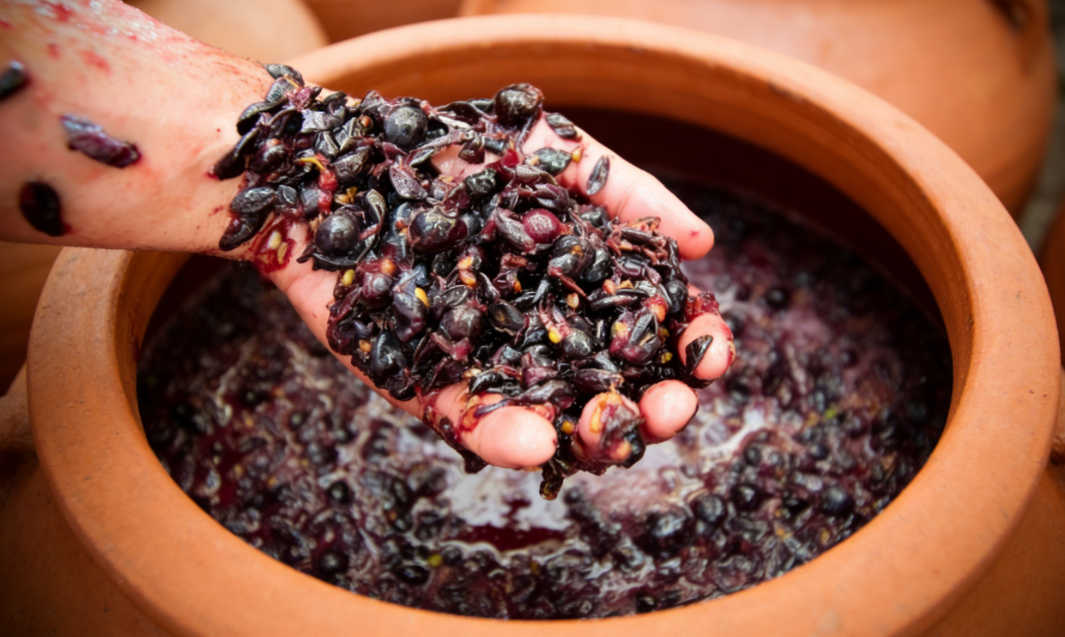
What Does Amphora Wine Taste Like?
Wines aged in clay amphorae typically do not have a pronounced “earthy” flavor.
The flavor influence is much more subtle; the key is that the micro-oxygenation provided by the clay amphorae softens the tannins, giving the wine a smoother texture and greater complexity, while also better highlighting the pure fruit aromas and terroir characteristics of the grape variety.
Amphora wines are often described as:
● Textural rather than aromatic
● Pure and focused
● Expressive of grape variety and terroir
Amphora-aged wines prioritize pure fruit aromas, and their gentle micro-oxidation softens tannins and enhances the wine’s texture, ultimately resulting in a complex, pure, and naturally distinctive flavor profile, avoiding the direct influence of oak barrels.
For many, amphora wine feels less polished—but more honest.
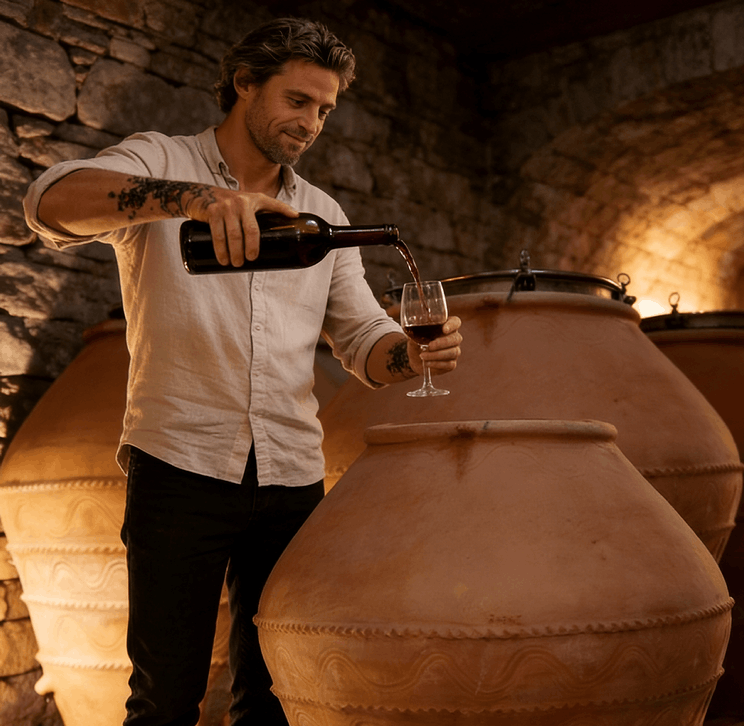
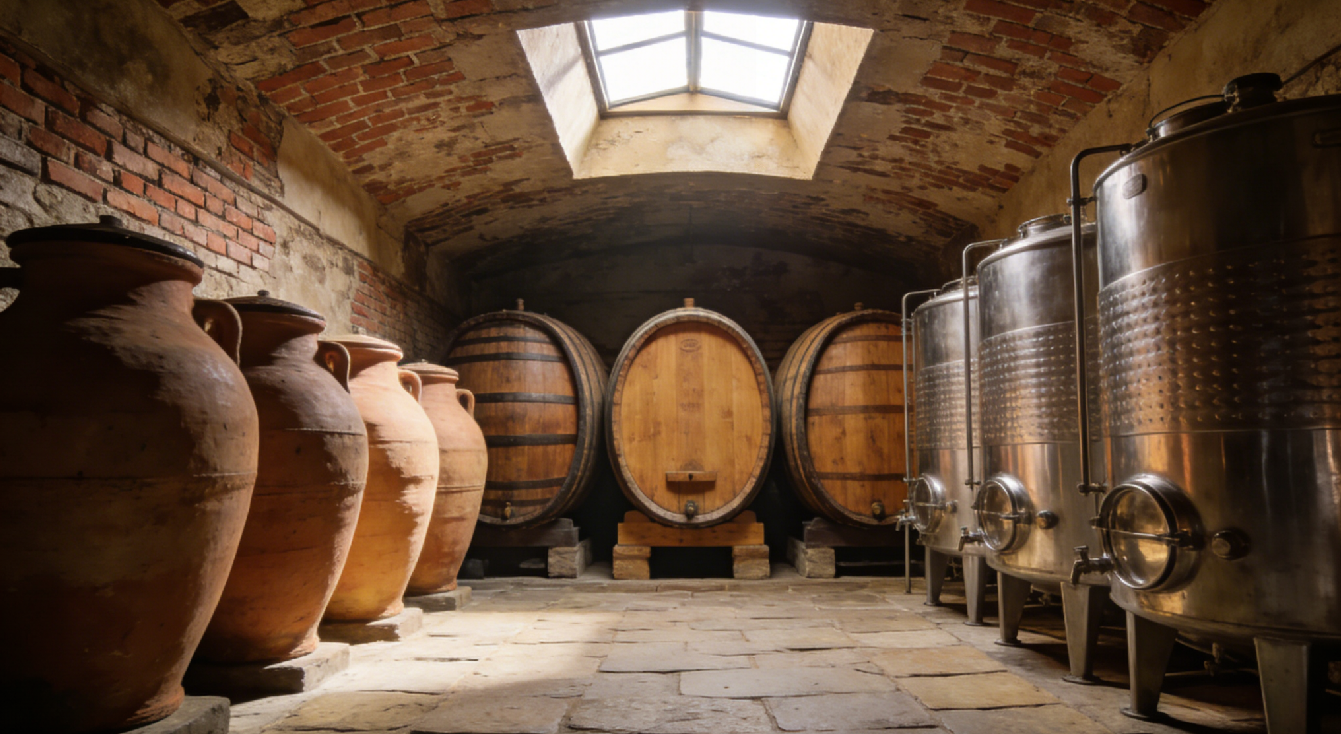
Amphora vs Oak Barrel vs Stainless Steel
Every fermentation vessel leaves a fingerprint on wine.
● Stainless steel
Stainless steel containers offer precise control to maintain freshness but may limit flavor development; oak barrels actively add flavor; while clay vessels strike a balance between the two, providing controlled micro-oxygenation to enhance texture.
● Oak barrels
Oak barrels actively contribute flavors such as vanilla and toast to wine, and promote its structural development and oxidation. However, this strong stylistic influence can sometimes mask the delicate fruity characteristics of the grape variety itself.
● Amphorae
Amphorae allow for controlled micro-oxygenation, which naturally and gently develops and enhances the texture and complexity of the wine without affecting its fundamental flavors.
This is why amphora wine often occupies a middle ground—neither engineered nor heavily stylized.
Why Do Natural Winemakers Prefer Amphora?
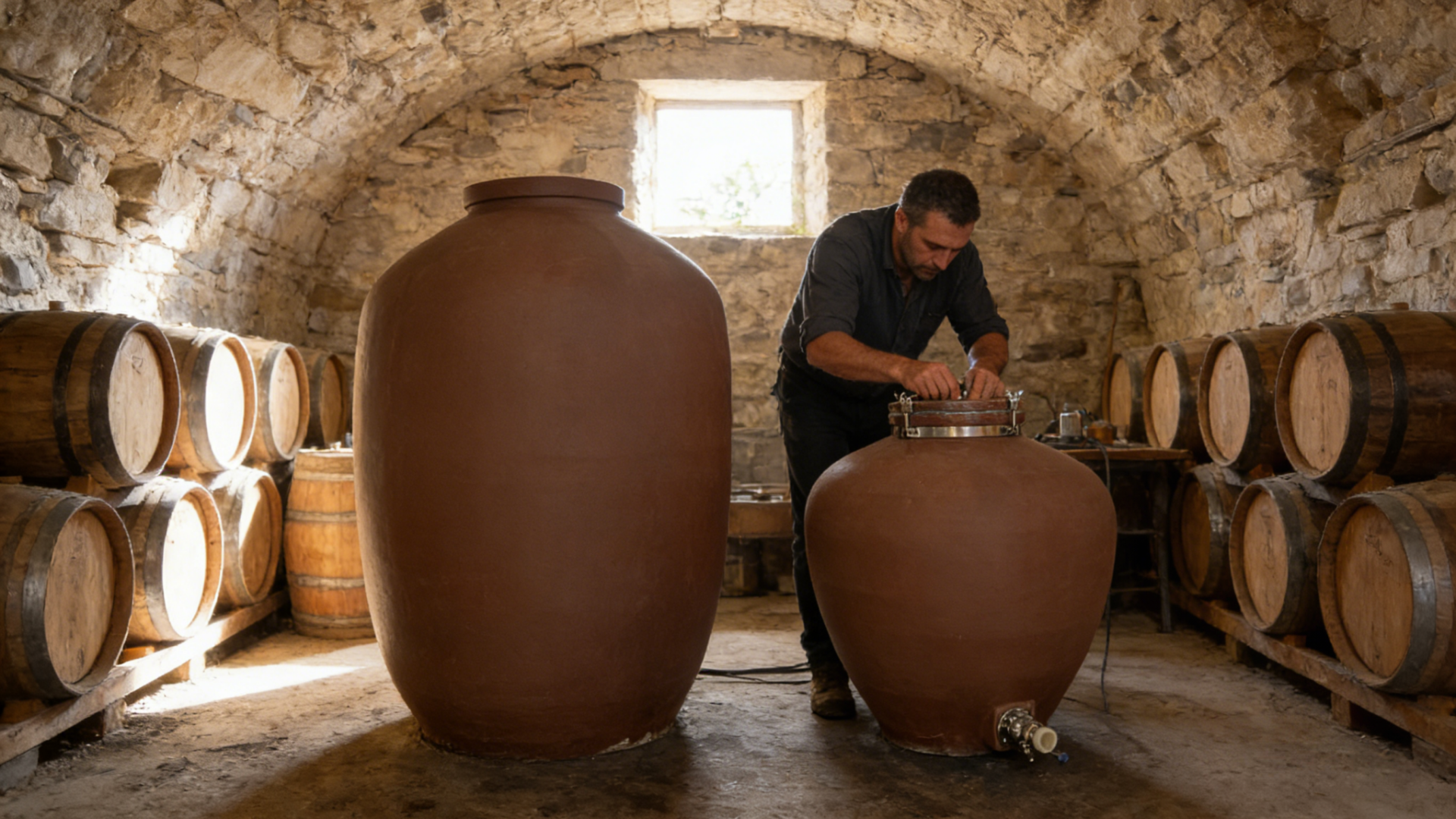
Amphorae are highly compatible with the philosophy of natural and organic winemaking. They support natural yeast fermentation and provide a controlled micro-oxygenation environment, allowing the wine to naturally develop richer textures and complexity with minimal intervention.
Amphora has the following advantages:
● Require minimal mechanical intervention
● Support spontaneous fermentation
● Avoid external flavor influence
● Emphasize sustainability and longevity
For winemakers seeking authenticity rather than uniformity, amphorae offer freedom—the freedom to let wine become itself.
Is Amphora Wine Always Natural Wine?
Not necessarily.
While many natural winemakers use amphorae, the vessel itself does not define the philosophy. Amphora wine can be clean, conventional, experimental, or natural—depending on how the wine is made.
Think of amphora as a tool, not a belief system.
This distinction matters, especially as amphora wines gain mainstream attention.
Amphora Wine in the Modern World
Today, amphora wine is produced across Italy, Spain, France, Portugal, Georgia, and beyond. It appears in orange wines, whites, reds, and even experimental blends.
What was once ancient is now contemporary again—reshaped by modern knowledge, craftsmanship, and global curiosity.
Who Is Amphora Wine For?
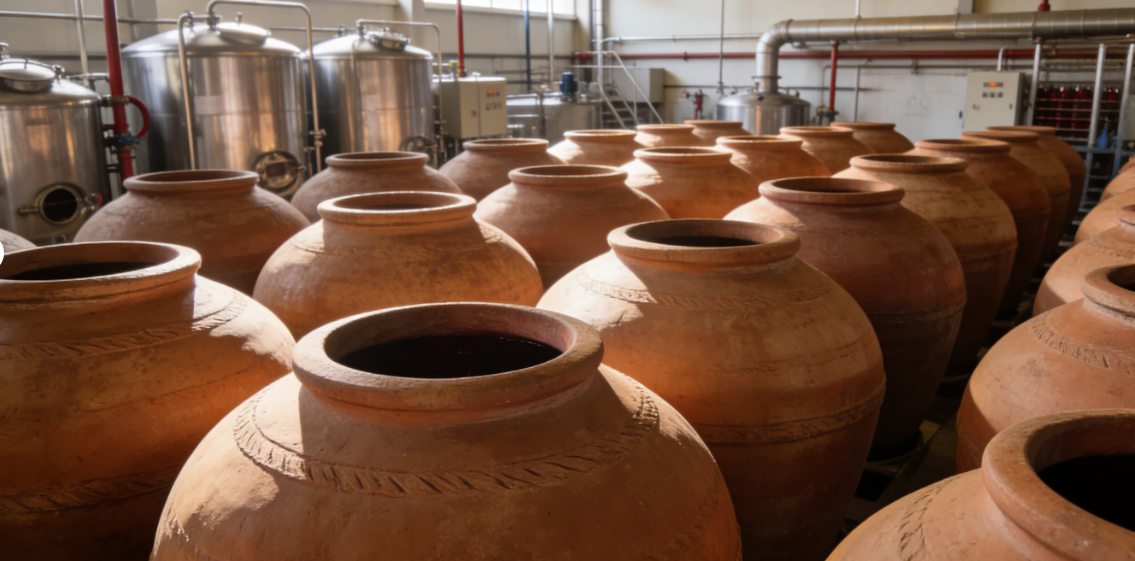
Amphora-aged wines are particularly appealing to wine lovers and professionals who seek authentic expressions of terroir, appreciate complex textures and minerality, and value low-intervention, natural winemaking principles.
● Curious wine drinkers seeking authenticity
● Natural wine enthusiasts
● Sommeliers and educators
● Winemakers exploring alternative fermentation
FAQ: Amphora Wine Explained
1. What is amphora wine?
Wine fermented or aged in clay or terracotta vessels that allow gentle oxygen exchange without adding flavor.
2. Does amphora wine taste earthy?
No. The clay affects texture and evolution, not taste.
3. Is amphora wine better than barrel wine?
Not better—different. Each vessel serves a different purpose.
4. Is amphora wine always natural?
No, but it is often used in natural winemaking.
5. Why is amphora wine becoming popular again?
Because it balances tradition, sustainability, and modern expression.
Conclusion
The significance of amphora winemaking in the contemporary world lies in its offering an alternative to overly controlled industrial winemaking—an approach based on respect and restraint. It is not simply a return to the past, but rather, through the unique micro-oxidation process of the amphora, it helps winemakers rediscover the subtle flavor layers, unique textures, and pure terroir expression of wine.
For discerning drinkers who know how to listen, amphora wines tell a story of patience and natural evolution, not complex techniques. HEXIN is committed to supporting this pursuit of authentic winemaking philosophy. If you are exploring how to integrate the ancient wisdom of amphora into your modern winery, contact us; we are ready to provide professional solutions.