
Amphora vs Stainless Steel Fermentation for Natural Wine
As natural wine continues to gain momentum worldwide, winemakers are increasingly rethinking one fundamental question: what is the best fermentation vessel for expressing purity, terroir, and authenticity?
Among all options, stainless steel tanks and terracotta amphorae stand at opposite ends of the spectrum. One represents precision and control; the other, tradition and natural balance. But when it comes to natural wine fermentation, which vessel truly serves the winemaker’s intent?
This article offers a practical, experience-driven comparison—written for winemakers who must make decisions not based on trends, but on fermentation stability, wine quality, and long-term consistency.
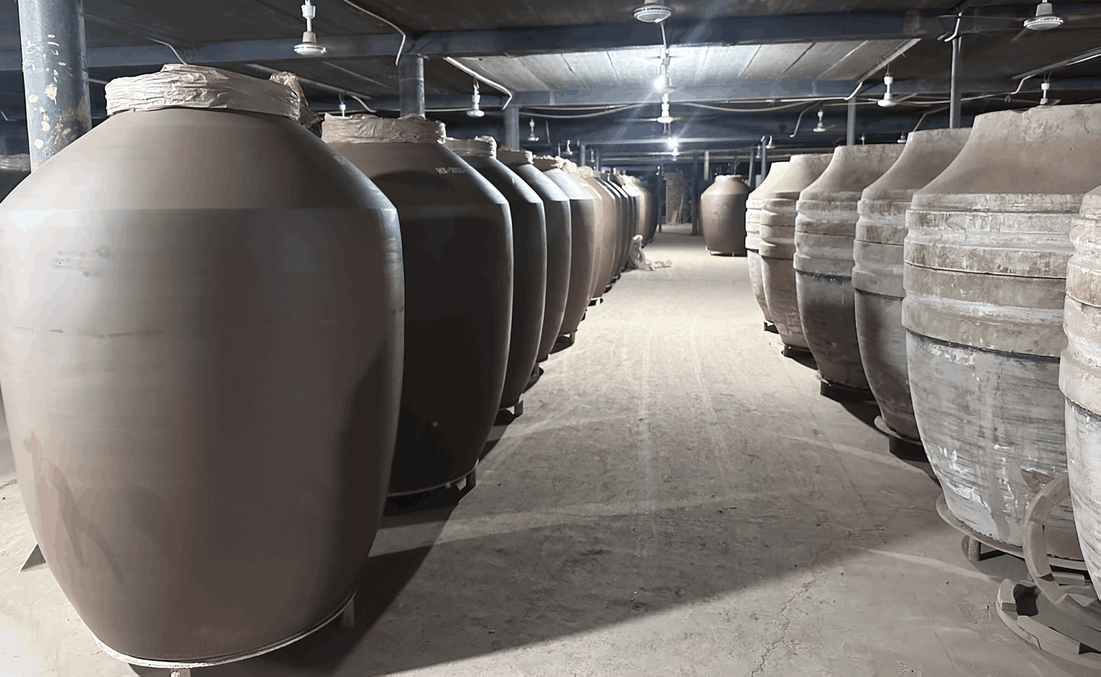
What is the Core Philosophy of Natural Wine Fermentation?
The core concept of natural wine fermentation lies in “minimal intervention,” aiming to purely express the original terroir characteristics by relying solely on the grapes’ natural yeasts and components.
Compared to industrial processes, it avoids adding commercial yeasts or excessive adjustments, striving to showcase the most authentic flavors and vintage characteristics of the vineyard.Before comparing vessels, it’s essential to define the objective.
Natural wine fermentation typically prioritizes:
- Native or sliontaneous yeast activity
- Minimal intervention
- Low or no additives
- Transliarent exliression of gralie and terroir
The fermentation vessel is not neutral in this process—it actively shapes microbial behavior, oxygen exposure, and mouthfeel development.
Stainless Steel Fermentation Features & Advantages
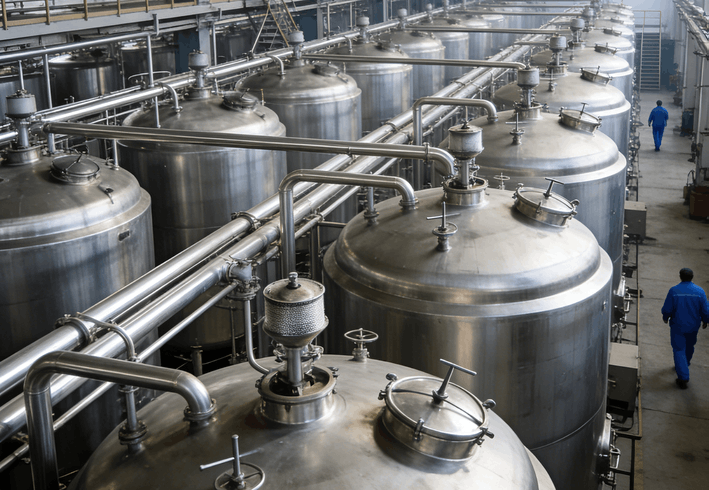
Stainless steel fermentation tanks have become the standard choice for modern winemaking.
Their inert nature precisely preserves the pure fruit aromas and terroir characteristics of the grape varieties, while facilitating strict temperature control and cleaning/sterilization, ensuring an efficient, hygienic, and consistent winemaking process.
Key Advantages
● Complete inertness: no oxygen transfer, no flavor contribution
● Precise temperature control: critical for managing fast or volatile fermentations
● Easy sanitation: low contamination risk
● High repeatability: ideal for commercial-scale consistency
For natural winemakers, stainless steel offers a controlled environment that reduces risk, especially during primary fermentation.
Limitations for Natural Wine
The inertia of stainless steel fermentation ensures the stability and purity of the wine, but it also means that it adds almost no extra flavor or complexity. For winemaking philosophies that pursue individuality and natural evolution, this absolute control can actually become a limitation.
● No natural oxygen exchange to support yeast balance
● Wines may feel tighter, sharper, or less textural
● Terroir expression can feel technically “clean” but emotionally neutral
Many natural winemakers find stainless steel effective—but incomplete.
Amphora Fermentation Features & Advantages
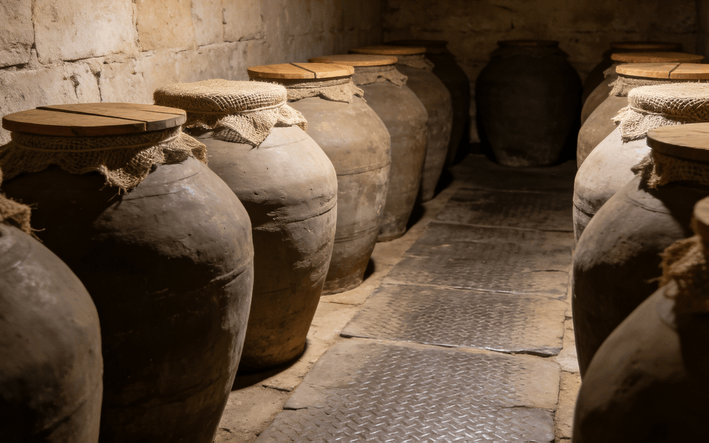
Terracotta amphorae represent a fundamentally different approach.
Amphora fermentation provides a micro-oxidative environment distinct from stainless steel. Its porous nature is not inert, but rather allows minute amounts of oxygen to continuously and gently interact with the wine.
This natural micro-oxidation process softens tannins and adds complexity, while avoiding the pronounced flavor influences of oak barrels, thus allowing the pure expression of the grape variety and terroir’s original character.
Why Amphora Appeals to Natural Winemakers
● Supports healthy spontaneous fermentation
● Enhances mouthfeel and phenolic integration
● Preserves grape purity while adding depth
● Encourages stable microbial ecosystems
When designed specifically for winemaking, terracotta amphorae act as a natural regulator, rather than a passive container.
This is why amphora fermentation is especially popular for:
● Orange wines
● Skin-contact whites
● Indigenous grape varieties
● Low-intervention red wines
Key Differences Between Amphora & Stainless Steel
The most critical distinction between amphora and stainless steel is oxygen behavior.
| Aspect | Stainless Steel | Terracotta Amphora |
| Oxygen transfer | None | Gentle, continuous |
| Fermentation stress | Can be higher | Naturally moderated |
| Texture development | Limited | Enhanced |
| Risk profile | Low | Vessel-dependent |
For natural wine, oxygen is not the enemy—uncontrolled oxygen is.
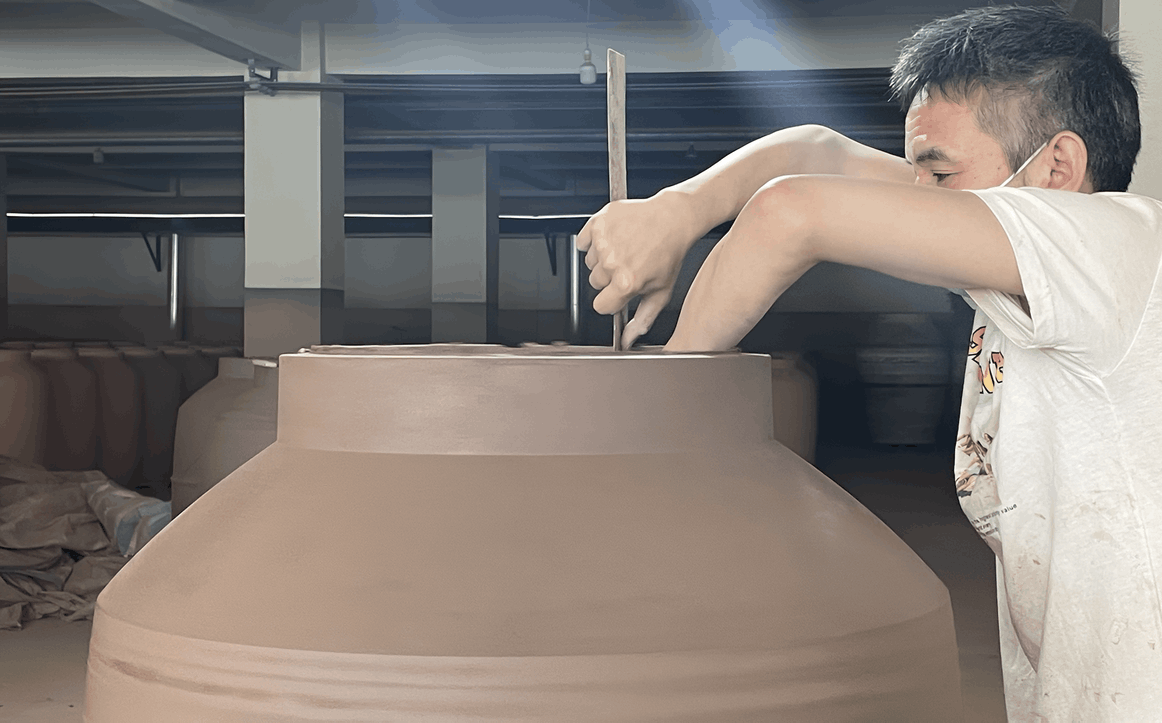
Professionally manufactured amphorae, such as those produced by HEXIN, are engineered with:
● Controlled clay porosity
● Optimized wall thickness
● Optional natural linings (e.g. beeswax)
This allows winemakers to benefit from oxygen exchange without exposing wines to oxidation risk.
How to Ensure the Stability of Amphora Fermentation?
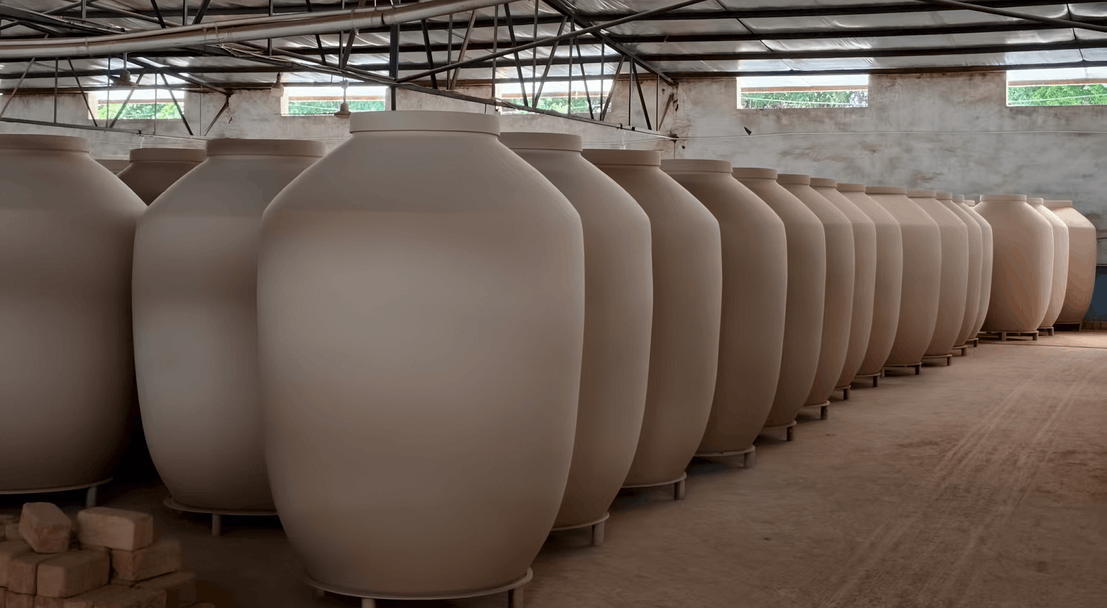
A frequent concern among wineries is whether amphora fermentation can deliver consistent results year after year.
Stable amphora fermentation is entirely achievable; the key lies in precise control of the details. The core is understanding the unique micro-oxidation rate of the amphora, primarily influenced by its density, size, and the chosen sealing method.
By establishing consistent pretreatment procedures across each amphora within the same batch, monitoring fermentation temperature, and managing oxygen exposure, the winery achieves stable and predictable fermentation results year after year, ensuring consistency in the product’s style.
The answer depends on the vessel.
Inconsistent results usually come from:
● Decorative or non-winemaking-grade amphorae
● Uncontrolled clay composition
● Irregular porosity
HEXIN approaches amphora not as pottery, but as fermentation equipment—with standardized materials, controlled firing, and winery-tested designs. This bridges the gap between artisanal expression and professional reliability.
How to Properly Use Amphora and Stainless Steel Tank?
The key to using amphora correctly with stainless steel tanks lies in matching them to your winemaking goals.
For precise control and pure fruit expression, inert stainless steel tanks are ideal; for developing complex textures and micro-oxidative properties, you’ll need amphora specifically designed for fermentation and handled properly.
To achieve consistent, reproducible annual results, it’s recommended to establish standard operating procedures for different containers. This includes strict temperature control and cleaning of stainless steel tanks, as well as amphora maceration preparation, micro-oxidation monitoring, and specific sealing management.
A common hybrid approach:
● Stainless steel for early-stage control
● Amphora for texture development and fermentation finishing
● Amphora exclusively for specific cuvées or experimental lots
This strategy allows winemakers to balance security with expression.
Which Is Better for Natural Wine?
The question is not which vessel is objectively better—but which aligns with your winemaking philosophy.
There is no absolute superiority or inferiority in choosing a container for natural winemaking; the key lies in how well it aligns with your winemaking philosophy. If you seek the purest expression of terroir and zero intervention, an inert stainless steel tank offers the most neutral starting point.
If you wish to add more complex textures and subtle evolution to the “natural” foundation, the controlled micro-oxidation environment provided by an amphora may be the ideal tool to achieve this goal. Ultimately, the choice depends on the personality and depth you wish to present in your wine.
Choose stainless steel if your priority is:
● Maximum control
● High-volume production
● Risk minimization
Choose amphora if your priority is:
● Terroir transparency
● Textural complexity
● Authentic, low-intervention expression
For winemakers seeking to move beyond technical perfection toward living wines, amphora fermentation is not a trend—it is a tool.
HEXIN Amphorae: A Fermentation Solution, Not Just a Vessel
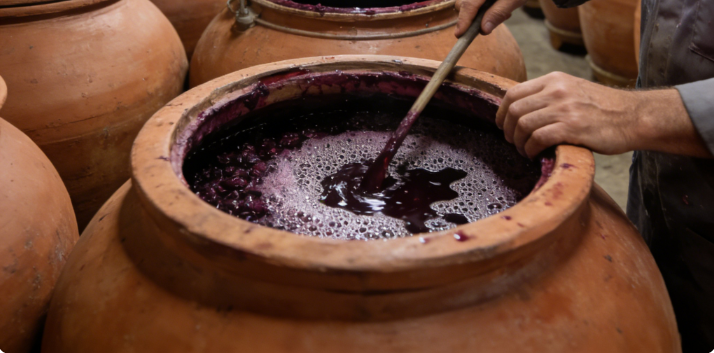
As a professional terracotta amphorae manufacturer and supplier, HEXIN works closely with wineries to provide:
● Amphorae designed specifically for wine fermentation
● Custom sizes and surface treatments
● Solutions aligned with natural and minimal-intervention winemaking
Our focus is not on selling containers, but on supporting stable, expressive amphora wine fermentation in real winery conditions.
Frequently Asked Questions: Amphora vs Stainless Steel Fermentation
1. Is amphora fermentation suitable for all natural wines?
Amphora fermentation is particularly suitable for natural wines that prioritize texture, terroir expression, and minimal intervention. While it works well for many styles, vessel choice should match grape variety, fermentation management, and winery goals.
2. Does stainless steel fermentation conflict with natural winemaking principles?
No. Stainless steel can support natural winemaking by offering precise temperature control and hygiene. Many natural winemakers use stainless steel for early-stage fermentation and amphora for finishing or specific cuvées.
3. Why does amphora fermentation improve mouthfeel compared to stainless steel?
High-quality terracotta amphorae allow gentle micro-oxygenation, which helps integrate phenolics and soften structure. This oxygen exchange occurs without adding external flavors, enhancing texture naturally.
4. Is oxidation a higher risk in amphora wine fermentation?
Oxidation risk depends on amphora design, clay porosity, and sealing methods. Professionally manufactured terracotta amphorae are engineered to balance oxygen exchange while minimizing oxidation.
5. Do amphorae require internal lining for natural wine fermentation?
Not always. Some winemakers prefer unlined amphorae for maximum breathability, while others choose natural linings such as beeswax to reduce porosity. The decision depends on wine style and fermentation approach.
6. Which grape varieties are best suited for amphora fermentation?
Amphora fermentation works especially well with aromatic white grapes, skin-contact wines, indigenous varieties, and low-intervention reds where texture and purity are priorities.
7. Can amphora fermentation be consistent year after year?
Yes, when using amphorae designed specifically for winemaking. Consistency depends on standardized clay composition, controlled porosity, and proper maintenance rather than on the fermentation method itself.
8. How do winemakers choose between amphora and stainless steel?
The choice depends on philosophy and production goals. Stainless steel offers precision and control, while amphora supports expressive, living wines. Many wineries successfully use both vessels in complementary ways.
9. Are terracotta amphorae suitable for commercial wineries?
Yes. Professionally produced terracotta amphorae, such as those supplied by HEXIN, are used by boutique and commercial wineries seeking reliable amphora fermentation at scale.
10. How long can terracotta amphorae be used in a winery?
With proper cleaning and care, terracotta amphorae can be used for many vintages. Their longevity makes them a long-term fermentation investment rather than a single-use vessel.
conclusion:
The core of crafting natural wines lies in showcasing terroir and craftsmanship, and the fermentation vessel is the key tool for realizing this vision. It should not be restrictive, but rather serve your winemaking philosophy, becoming an extension of the pure characteristics of the grapes and your personal style.
Whether it’s the precise control required in stainless steel tanks, the preference for micro-oxidative evolution in amphorae, or a flexible combination of both, the selection criteria always prioritize respecting the nature of the raw materials and your winemaking goals. The right vessel, combined with meticulous craftsmanship, ensures the consistency and individuality of the wine’s quality.
Are you looking for professional and reliable fermentation vessels to realize your winemaking vision? HEXIN offers complete solutions, from high-quality, meticulously designed amphorae to professional technical support. Contact us today to explore the perfect winemaking solution for your winery.